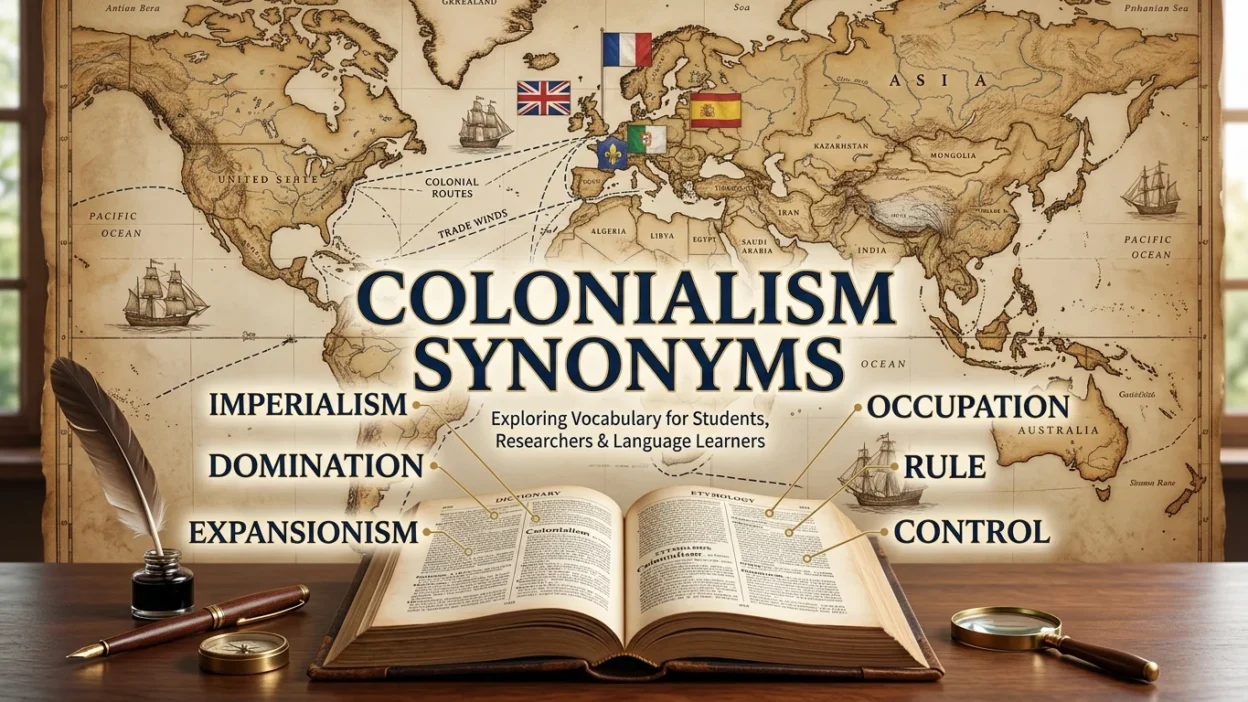
When exploring colonialism synonyms, it helps to look beyond vocabulary and understand the wider historical picture. Terms such as colonialism, colonial, colonization, imperialism, and empire are closely connected to the way societies developed across different regions.
A major publisher preparing a book release in 2026 may examine how Protestant missionary groups and other missionaries influenced communities, leaving behind a lasting legacy while also contributing to injustices. From my own reading of historical records, it is often a surprise to see how a single journey can link cultures, politics, trade, and entire continents through shared experiences and long-term connections.
A fascinating example is chamoy, whose story brings together blue-and-white ceramics, Spanish traditions, and Mexico. These traditions were later adopted by local artisans, creating unique cultural expressions. Similar developments appeared in Hong Kong, where a British presence lasting 156 years helped shape a global outlook and a reputation as a responsible partner. This status was gradually earned through international engagement, showing how cultural exchange often evolved alongside larger colonial systems.
The effects of these systems can also be observed in Fiji, where an Australian billionaire proposed a plan to burn rubbish for energy. Critics argued that such waste projects carried risks of spoiling a beach paradise, according to villagers, a Pacific nation representative, and an ambassador raising local concerns. Across many African states, people fought against colonial influence while working toward greater control of their future.
What Does Colonialism Mean?
Colonialism is the practice of one country establishing control over another territory, often for political, economic, or strategic benefits. Historically, colonial powers expanded their influence by settling lands, controlling resources, and governing local populations.
The term often carries historical and political significance, especially when discussing empires, exploration, and global history.
30 Colonialism Synonyms
1. Imperialism
Meaning: Expanding power over other territories.
Example: The nation pursued imperialism to increase its influence.
Best Usage: Political and historical discussions.
2. Expansionism
Meaning: A policy of territorial growth.
Example: Expansionism shaped many nineteenth-century governments.
Best Usage: Government and foreign policy topics.
3. Occupation
Meaning: Control of a territory by an outside power.
Example: The occupation lasted for decades.
Best Usage: Military or political contexts.
4. Domination
Meaning: Exercising power over others.
Example: The empire maintained domination through military strength.
Best Usage: Discussions of authority and control.
5. Conquest
Meaning: Taking territory through force.
Example: The conquest changed the region’s culture.
Best Usage: Historical events.
6. Annexation
Meaning: Officially adding territory to a state.
Example: The annexation sparked international debate.
Best Usage: Legal and political writing.
7. Settlement
Meaning: Establishing communities in new lands.
Example: European settlement transformed the region.
Best Usage: Migration and history topics.
8. Colonization
Meaning: The process of creating colonies.
Example: Colonization affected indigenous societies.
Best Usage: Direct alternative to colonialism.
9. Rule
Meaning: Governing a territory.
Example: Foreign rule lasted for many years.
Best Usage: General historical writing.
10. Governance
Meaning: Administration of a territory.
Example: Colonial governance influenced local laws.
Best Usage: Academic writing.
11. Hegemony
Meaning: Dominant influence or leadership.
Example: The country’s hegemony extended across continents.
Best Usage: Political science discussions.
12. Subjugation
Meaning: Bringing people under control.
Example: The subjugation of local populations faced resistance.
Best Usage: Historical analysis.
13. Control
Meaning: Power over a place or group.
Example: Control of trade routes increased wealth.
Best Usage: General contexts.
14. Supremacy
Meaning: Highest authority or dominance.
Example: The empire sought regional supremacy.
Best Usage: Political discussions.
15. Dominion
Meaning: Territory under authority.
Example: The dominion expanded rapidly.
Best Usage: Historical texts.
16. Overseas Rule
Meaning: Governing distant territories.
Example: Overseas rule connected several regions.
Best Usage: Colonial history.
17. Territorial Expansion
Meaning: Increasing land ownership.
Example: Territorial expansion became a national goal.
Best Usage: Formal writing.
18. Foreign Rule
Meaning: Government by an outside power.
Example: Foreign rule influenced education systems.
Best Usage: Historical discussions.
19. Empire Building
Meaning: Creating and expanding an empire.
Example: Empire building shaped global politics.
Best Usage: Informal historical writing.
20. Protectorate System
Meaning: Indirect control over a territory.
Example: The protectorate system limited local independence.
Best Usage: Specific colonial structures.
21. Exploitation
Meaning: Using resources or people unfairly.
Example: Critics argued colonialism encouraged exploitation.
Best Usage: Social and economic analysis.
22. Encroachment
Meaning: Gradual intrusion into territory.
Example: Encroachment led to conflicts.
Best Usage: Territorial disputes.
23. Occupancy
Meaning: Living in or controlling an area.
Example: Occupancy changed land ownership patterns.
Best Usage: Historical contexts.
24. Administration
Meaning: Managing a territory.
Example: Colonial administration introduced new institutions.
Best Usage: Academic writing.
25. Authority
Meaning: Official power to govern.
Example: Colonial authority influenced local laws.
Best Usage: General writing.
26. Dependency
Meaning: Territory controlled by another nation.
Example: The dependency relied heavily on trade.
Best Usage: Historical references.
27. Influence
Meaning: Power to affect decisions or behavior.
Example: Cultural influence remained long after independence.
Best Usage: Broader discussions.
28. Intervention
Meaning: Involvement in another region’s affairs.
Example: Foreign intervention altered political structures.
Best Usage: Political analysis.
29. Territorial Control
Meaning: Holding power over land.
Example: Territorial control was strategically important.
Best Usage: Formal writing.
30. Overseas Expansion
Meaning: Growth beyond national borders.
Example: Overseas expansion increased access to resources.
Best Usage: Historical and economic discussions.
Colonialism Synonyms Comparison Tabl
| Synonym | Best For | Tone |
| Colonization | Direct replacement | Neutral |
| Imperialism | Political analysis | Academic |
| Expansionism | Government policy | Formal |
| Conquest | Military history | Strong |
| Occupation | Military control | Serious |
| Annexation | Legal territory acquisition | Formal |
| Settlement | Population movement | Neutral |
| Hegemony | Global influence | Academic |
| Domination | Power imbalance | Critical |
| Exploitation | Economic criticism | Negative |
How to Choose the Right Synonym
For Academic Essays
Use:
- Imperialism
- Hegemony
- Colonization
- Governance
- Expansionism
These words sound formal and work well in school assignments.
For History Writing
Use:
- Conquest
- Annexation
- Settlement
- Empire Building
- Foreign Rule
These terms fit historical events and timelines.
For Political Discussions
Use:
- Domination
- Supremacy
- Hegemony
- Territorial Expansion
- Intervention
These emphasize power and influence.
For Critical Analysis
Use:
- Exploitation
- Subjugation
- Encroachment
- Domination
- Occupation
These highlight the negative impacts often associated with colonial systems.
Common Mistakes When Using Colonialism Synonyms
- Don’t use conquest and colonization as exact equivalents. Conquest often refers to military victory, while colonization involves long-term settlement and control.
- Don’t use hegemony when discussing direct territorial rule; it often refers to influence rather than formal control.
- Remember that imperialism is usually broader than colonialism and may not always involve settlements.
Conclusion
Learning colonialism synonyms helps improve vocabulary, strengthen writing, and communicate historical and political ideas more effectively. While colonialism remains the most common term, alternatives such as imperialism, expansionism, conquest, occupation, and hegemony can provide greater precision depending on the context.
When choosing a synonym, consider your purpose, audience, and tone. Academic writing may benefit from formal terms like imperialism or hegemony, while historical discussions often work better with words like conquest or settlement. By understanding these distinctions, you can write with greater clarity and confidence.

Patrick Frank is a talented humor writer at PunHubs.com, specializing in witty puns and playful wordplay. Passionate about language and comedy, he creates content that entertains and delights readers. Patrick’s goal is to spread laughter through clever jokes, funny one-liners, and engaging pun collections for all audiences.