Understanding synonyms means learning how the right word choice can create a positive, precise, and meaningful impression. In English, synonyms are not just replacements they carry different tones, emotions, and contexts. Choosing the right synonym can make your writing more natural, expressive, and impactful.
For students, ESL learners, writers, and content creators, mastering synonyms is a powerful skill. It improves communication, avoids repetition, and helps match the exact tone you want whether formal, casual, polite, or descriptive. This article focuses on the word “demure” and its synonyms, helping you understand when and how to use them effectively.
What Does “Demure” Mean?
Demure describes someone who is quiet, modest, shy, or reserved, often in a gentle and polite way. It is commonly used for behavior, appearance, or personality.
Simple Meaning:
A person who is calm, shy, and does not draw attention to themselves.
Tone:
Positive, polite, sometimes slightly old-fashioned.
Example:
She gave a demure smile during the meeting.
30 Synonyms of “Demure” (With Meanings, Examples & Usage)
1. Modest
Meaning: Not showing off; simple
Example: She wore a modest dress to the event.
Usage: Common in behavior and clothing
2. Reserved
Meaning: Quiet and not very expressive
Example: He is reserved around strangers.
Usage: Personality
3. Shy
Meaning: Nervous around people
Example: The child is shy in class.
Usage: Informal, everyday use
4. Quiet
Meaning: Not talking much
Example: She remained quiet during the discussion.
Usage: General
5. Timid
Meaning: Lacking confidence or courage
Example: His timid voice was barely heard.
Usage: Slightly negative tone
6. Introverted
Meaning: Prefers being alone
Example: She is introverted but very thoughtful.
Usage: Personality type
7. Meek
Meaning: Gentle and submissive
Example: He gave a meek response.
Usage: Can sound weak
8. Soft-spoken
Meaning: Speaks gently and quietly
Example: The teacher is soft-spoken.
Usage: Positive tone
9. Bashful
Meaning: Easily embarrassed
Example: He looked bashful after the compliment.
Usage: Light, friendly
10. Coy
Meaning: Shy in a playful way
Example: She gave a coy smile.
Usage: Slightly flirtatious
11. Proper
Meaning: Well-behaved and polite
Example: She always acts proper.
Usage: Formal tone
12. Well-mannered
Meaning: Polite and respectful
Example: He is a well-mannered student.
Usage: Social behavior
13. Unassuming
Meaning: Not trying to impress
Example: She has an unassuming personality.
Usage: Positive humility
14. Reticent
Meaning: Not sharing thoughts easily
Example: He was reticent in interviews.
Usage: Formal
15. Withdrawn
Meaning: Emotionally distant
Example: She became withdrawn after the event.
Usage: Emotional context
16. Polite
Meaning: Respectful in behavior
Example: He gave a polite reply.
Usage: Universal
17. Subdued
Meaning: Calm and quiet
Example: The crowd was subdued.
Usage: Mood or tone
18. Gentle
Meaning: Soft and kind
Example: She has a gentle nature.
Usage: Positive
19. Mild
Meaning: Not strong or intense
Example: He has a mild personality.
Usage: Neutral tone
20. Low-key
Meaning: Simple and not attention-seeking
Example: They had a low-key wedding.
Usage: Modern, informal
21. Discreet
Meaning: Careful and private
Example: She is discreet about personal matters.
Usage: Professional/social
22. Ladylike
Meaning: Polite and refined (traditional)
Example: Her behavior is ladylike.
Usage: Old-fashioned
23. Composed
Meaning: Calm and controlled
Example: She remained composed under pressure.
Usage: Formal
24. Calm
Meaning: Not nervous or excited
Example: He stayed calm during the crisis.
Usage: General
25. Quiet-natured
Meaning: Naturally silent
Example: She is quiet-natured.
Usage: Descriptive
26. Passive
Meaning: Not active or assertive
Example: He has a passive attitude.
Usage: Slightly negative
27. Respectful
Meaning: Showing respect
Example: The student was respectful.
Usage: Social
28. Humble
Meaning: Not proud or arrogant
Example: He is humble despite success.
Usage: Positive
29. Self-contained
Meaning: Emotionally controlled
Example: She is self-contained.
Usage: Formal
30. Delicate
Meaning: Gentle and soft
Example: She has a delicate manner.
Usage: Positive, soft tone
Comparison Guide: When to Use Each Synonym
| Situation | Best Synonyms |
| Formal writing | Reticent, Composed, Discreet |
| Casual conversation | Shy, Quiet, Low-key |
| Positive personality | Gentle, Humble, Soft-spoken |
| Slightly negative tone | Timid, Passive, Meek |
| Romantic/playful tone | Coy, Bashful |
| Professional setting | Reserved, Polite, Well-mannered |
How to Choose the Right Synonym
Choosing the right synonym depends on tone, situation, and intention.
1. For Positive Impressions
Use: Gentle, Humble, Soft-spoken, Modest
→ Best when describing someone kindly
2. For Neutral Descriptions
Use: Quiet, Reserved, Calm, Introverted
→ Simple and safe choices
3. For Formal Writing
Use: Reticent, Composed, Discreet
→ Academic or professional tone
4. For Slightly Negative Meaning
Use: Timid, Passive, Meek
→ When showing lack of confidence
5. For Friendly or Social Tone
Use: Bashful, Coy, Low-key
→ Light, conversational use
Conclusion
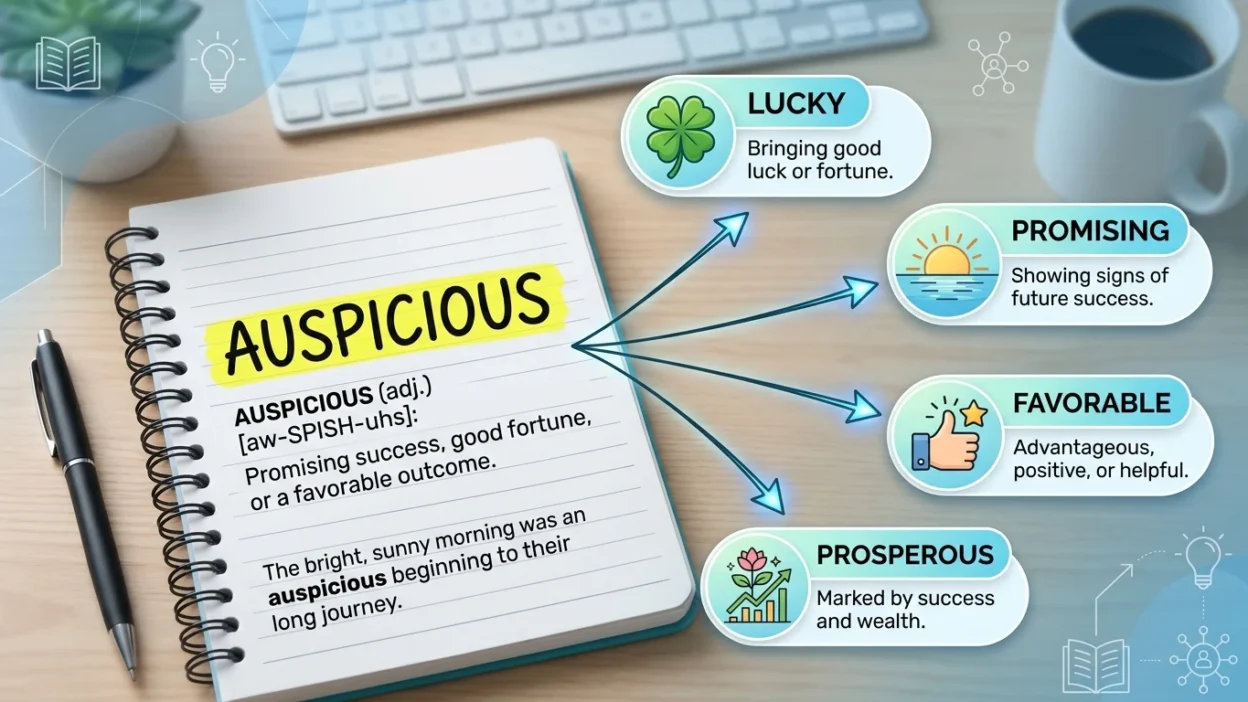
Learning auspicious synonyms helps you choose words that fit the right tone and meaning. The word “demure” is rich with nuance, and its synonyms allow you to express different shades of personality from gentle and polite to shy or reserved.
By understanding these 30 synonyms, their meanings, and their contexts, you can:
- Improve your vocabulary
- Write more naturally and clearly
- Match tone with intention
The key is not just knowing synonyms but knowing when to use them. Practice using these words in sentences, and over time, your language will become more confident and expressive.