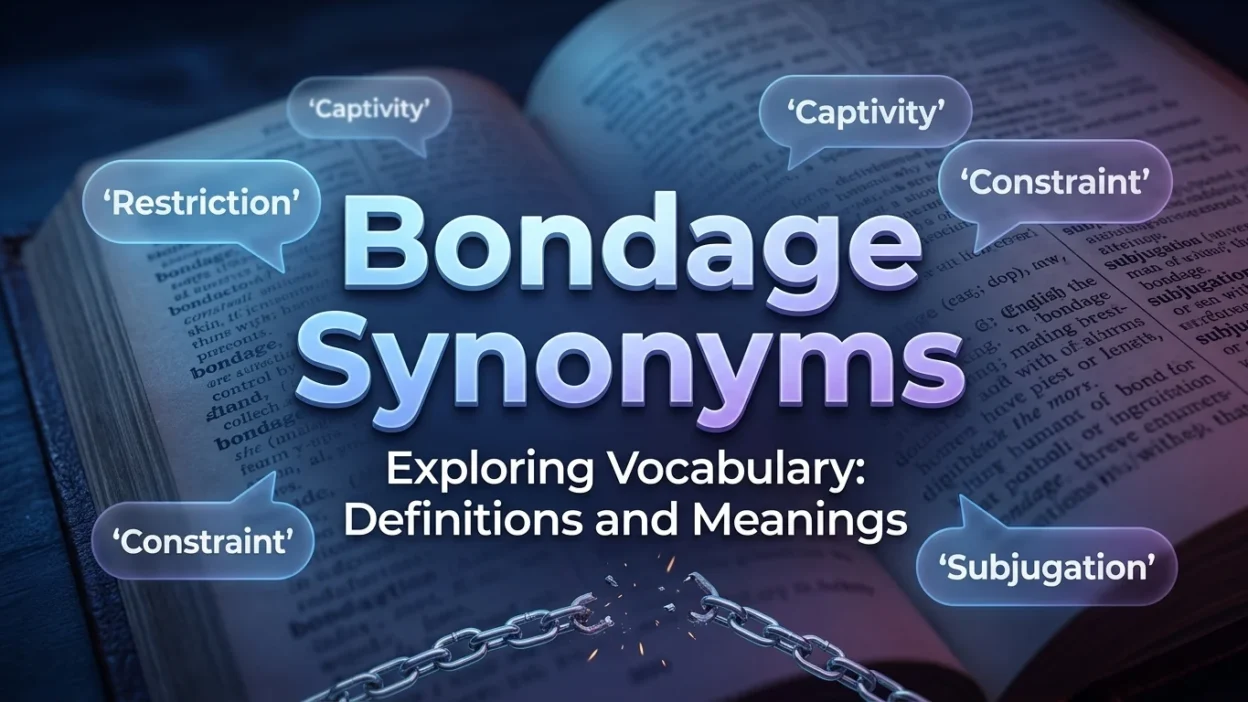
The word bondage can have different meanings depending on the context. It may describe slavery, control, imprisonment, restriction, dependence, or even emotional limitation. Because of these varied meanings, learning bondage synonyms helps writers, students, ESL learners, and content creators choose more accurate and natural vocabulary.
Understanding synonyms also improves communication skills. Some alternatives sound formal, while others fit emotional, historical, legal, or literary contexts. Knowing the difference helps you avoid using the wrong tone in writing or conversation.
In this guide, you will learn the meaning of “bondage,” discover 30 useful synonyms, understand their usage, and see easy examples that make each word simple to remember.
What Does “Bondage” Mean?
The word bondage usually means a state of being controlled, restricted, or unable to act freely. It can refer to:
- Physical imprisonment
- Slavery or forced labor
- Emotional control
- Financial dependence
- Lack of freedom
Simple Definition
Bondage = a condition where someone lacks freedom or is controlled by another person, system, or situation.
Example Sentences
- The workers lived in economic bondage.
- The novel describes life in slavery and bondage.
- She wanted freedom from emotional bondage.
30 Best Bondage Synonyms With Meanings and Examples
1. Slavery
Meaning: Forced ownership and labor without freedom.
Example: Millions suffered under slavery for centuries.
Best Usage Context: Historical and social discussions.
2. Captivity
Meaning: Being held prisoner or unable to escape.
Example: The animal spent years in captivity.
Best Usage Context: Physical imprisonment.
3. Imprisonment
Meaning: The condition of being locked up.
Example: The criminal faced long imprisonment.
Best Usage Context: Legal and criminal contexts.
4. Servitude
Meaning: A condition of serving others under control.
Example: The workers lived in forced servitude.
Best Usage Context: Formal and historical writing.
5. Oppression
Meaning: Cruel or unfair control over people.
Example: The citizens fought against oppression.
Best Usage Context: Political and social topics.
6. Enslavement
Meaning: The act of making someone a slave.
Example: The story explores human enslavement.
Best Usage Context: Historical discussions.
7. Confinement
Meaning: Being restricted to a limited space.
Example: The prisoner endured years of confinement.
Best Usage Context: Physical restriction.
8. Restraint
Meaning: Limitation or control over freedom.
Example: The rules placed restraint on creativity.
Best Usage Context: Emotional or behavioral limits.
9. Subjugation
Meaning: Control or domination by force.
Example: The nation resisted subjugation.
Best Usage Context: Political or military writing.
10. Dependence
Meaning: Relying heavily on someone or something.
Example: Financial dependence can feel like bondage.
Best Usage Context: Emotional or financial topics.
11. Shackles
Meaning: Chains used to restrain someone.
Example: The prisoner wore heavy shackles.
Best Usage Context: Literal or symbolic restriction.
12. Constraint
Meaning: Something that limits freedom.
Example: Budget constraints slowed the project.
Best Usage Context: Professional and general use.
13. Domination
Meaning: Control over others.
Example: The ruler maintained domination through fear.
Best Usage Context: Social and political writing.
14. Control
Meaning: Power to direct or limit someone.
Example: She escaped from his emotional control.
Best Usage Context: Everyday and emotional contexts.
15. Tyranny
Meaning: Harsh and unfair rule.
Example: The people rebelled against tyranny.
Best Usage Context: Government and history topics.
16. Submission
Meaning: Yielding to another’s authority.
Example: The agreement required total submission.
Best Usage Context: Formal or emotional discussions.
17. Suppression
Meaning: Preventing freedom or expression.
Example: The regime encouraged suppression of speech.
Best Usage Context: Political and social writing.
18. Limitation
Meaning: A restriction on freedom or ability.
Example: Physical limitations affected his work.
Best Usage Context: General situations.
19. Restriction
Meaning: A rule or condition limiting freedom.
Example: Travel restrictions were introduced quickly.
Best Usage Context: Legal and official contexts.
20. Thralldom
Meaning: A state of being controlled or enslaved.
Example: The kingdom lived in thralldom for decades.
Best Usage Context: Literary and old-fashioned writing.
21. Incarceration
Meaning: Imprisonment in jail or prison.
Example: His incarceration lasted ten years.
Best Usage Context: Legal writing.
22. Servancy
Meaning: The condition of serving others.
Example: The workers rejected lifelong servancy.
Best Usage Context: Rare or historical contexts.
23. Enclosure
Meaning: Being closed in or surrounded.
Example: The enclosure created a feeling of bondage.
Best Usage Context: Physical spaces.
24. Internment
Meaning: Detaining people during conflict or war.
Example: Families suffered during internment.
Best Usage Context: Historical and military topics.
25. Helplessness
Meaning: Lack of power or freedom to act.
Example: He felt helplessness in the toxic environment.
Best Usage Context: Emotional writing.
26. Burden
Meaning: A heavy responsibility or hardship.
Example: Debt became a financial burden.
Best Usage Context: Figurative restriction.
27. Entanglement
Meaning: Being trapped in a difficult situation.
Example: She wanted freedom from emotional entanglement.
Best Usage Context: Relationships and emotions.
28. Yoke
Meaning: A symbol of oppression or control.
Example: The nation broke free from colonial yoke.
Best Usage Context: Historical and symbolic use.
29. Dependency
Meaning: Reliance on others for support.
Example: Dependency can limit independence.
Best Usage Context: Emotional and financial discussions.
30. Subordination
Meaning: Lower status under another’s authority.
Example: Workers protested against unfair subordination.
Best Usage Context: Workplace and political writing.
Quick Comparison Table for Bondage Synonyms
| Synonym | Tone | Best Use |
|---|---|---|
| Slavery | Strong | Historical topics |
| Captivity | Neutral | Physical imprisonment |
| Dependence | Emotional | Relationships and finance |
| Restriction | Common | Everyday situations |
| Tyranny | Powerful | Political discussions |
| Shackles | Symbolic | Literary writing |
| Subjugation | Formal | Academic writing |
| Burden | Mild | Figurative situations |
| Enslavement | Serious | Human rights topics |
| Confinement | Neutral | Legal or physical limits |
How to Choose the Right Bondage Synonym
For Historical Writing
Use:
- Slavery
- Enslavement
- Servitude
- Subjugation
These fit discussions about history, politics, and social injustice.
For Emotional Contexts
Use:
- Dependence
- Entanglement
- Helplessness
- Control
These work well for relationships and personal struggles.
For Legal or Physical Restriction
Use:
- Imprisonment
- Incarceration
- Confinement
- Captivity
These describe real physical limits on freedom.
For Symbolic or Literary Tone
Use:
- Shackles
- Yoke
- Thralldom
- Submission
These create dramatic or emotional effects in writing.
Common Mistakes When Using Bondage Synonyms
Using Strong Words Too Casually
Words like slavery or enslavement carry serious historical meaning. Avoid using them for small inconveniences.
Incorrect:
- Homework feels like slavery.
Better:
- Homework feels restrictive.
Confusing Physical and Emotional Meanings
Some synonyms describe actual imprisonment, while others describe emotional control.
Physical Restriction
- Captivity
- Imprisonment
- Incarceration
Emotional Restriction
- Dependence
- Control
- Entanglement
Choose carefully based on context.
Why Learning Bondage Synonyms Matters
Learning different synonyms for bondage can help you:
- Improve vocabulary
- Write more clearly
- Avoid repetition
- Understand literature better
- Express emotional or historical ideas accurately
Strong vocabulary also makes essays, stories, and conversations more engaging.
Conclusion
Understanding bondage synonyms allows you to express ideas about control, restriction, and lack of freedom with greater accuracy. Some words focus on physical imprisonment, while others describe emotional dependence or political oppression.
For formal writing, words like subjugation, servitude, and enslavement work well. In emotional contexts, dependence and entanglement sound more natural. Literary writing often benefits from symbolic words like shackles or yoke.
By learning these synonyms and their meanings, you can improve your English vocabulary and communicate more effectively in both writing and speech.

Debra Christine is a creative writer at PunHubs.com who enjoys crafting clever puns and lighthearted humor. With a passion for wordplay and storytelling, she creates fun and engaging content for readers. Debra loves making people smile through witty jokes, playful language, and entertaining pun collections shared on PunHubs.